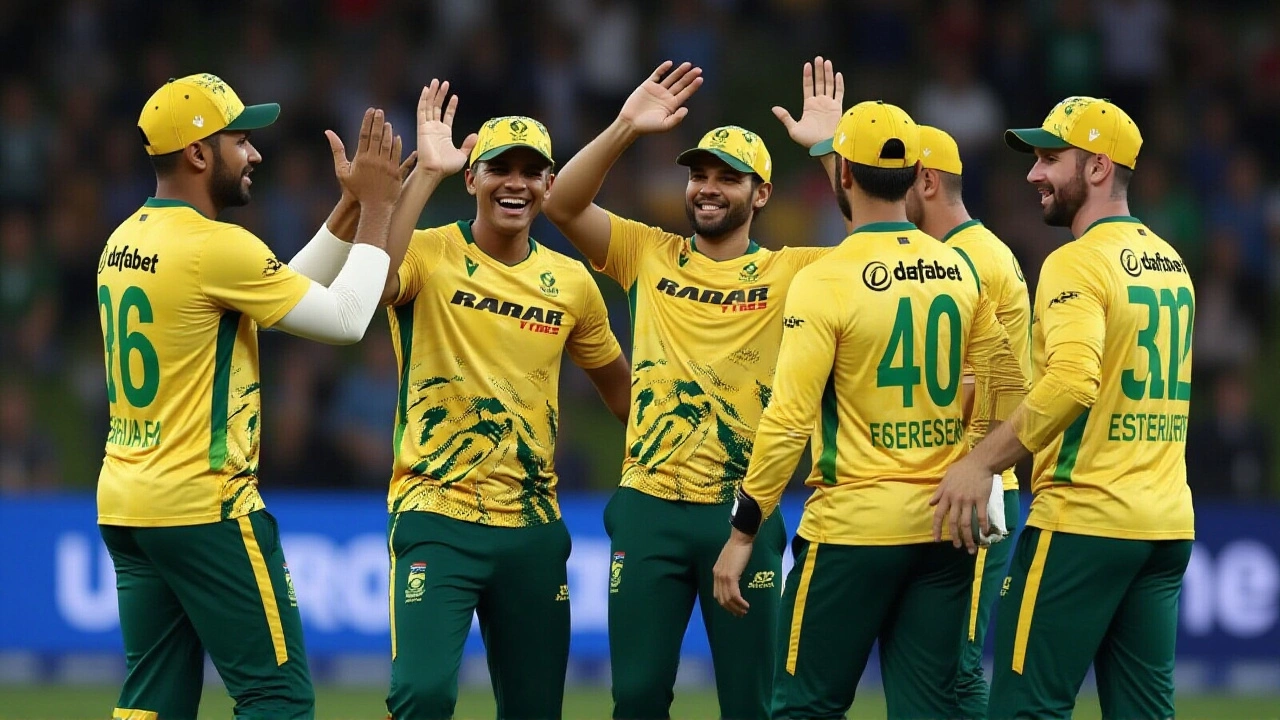
It’s officially over for South Africa. In a stunning reversal of fortune at the Eden Gardens in Kolkata, New Zealand dismantled their rivals by nine wickets to book their spot in the ICC T20 World Cup 2026 FinalIndia. The match, played on Wednesday, March 4, 2026, wasn't just a win; it was an exorcism. For years, New Zealand had been haunted by South Africa in this tournament, losing all five previous encounters. Not anymore.
Here’s the thing: you couldn’t have predicted this dominance if you’d looked at the head-to-head stats before the toss. South Africa had dominated the narrative. But under the lights in Kolkata, with a capacity crowd roaring, the Black Caps didn’t just play better—they played fearless cricket. Captain Mitchell Santner won the toss and made the bold call to bowl first, a decision that would define the night.
The Chase That Never Was
South Africa batted first, setting up what they hoped would be a competitive total. They managed 169 for 8 in their 20 overs. On paper, that’s a decent score. It’s chaseable, but it requires precision. Except New Zealand didn’t come for precision. They came for destruction.
The opening partnership was electric from ball one. By the end of the powerplay, the scoreboard read 100 runs in just eight overs. Let that sink in. Eight overs. One hundred runs. The pressure evaporated instantly. While the South African bowlers scrambled to find lines and lengths, the Kiwi batsmen were hunting boundaries with terrifying efficiency.
They reached the target of 170 in just 12.5 overs, losing only one wicket. It was clinical. It was brutal. And for the South African fans watching from home or sitting in the stands, it was heartbreaking. This wasn’t a close finish; it was a rout.
Finn Allen’s Storm
If there’s one name to remember from this semi-final, it’s Finn Allen. Reports describe his innings as a "storm," and honestly, that doesn’t feel like hyperbole. Allen didn’t just open the batting; he opened the floodgates.
While specific strike rates and boundary counts are still being crunched by analysts, the visual evidence is clear. Allen attacked from the get-go, targeting the shorter boundaries of Eden Gardens with ruthless intent. He put immense pressure on the South African attack during the crucial powerplay phase, ensuring that New Zealand never felt behind the rate. His aggression set the tone for the entire innings, allowing the rest of the team to cruise through the middle overs without panic.
Allen’s performance wasn’t just about runs; it was about mindset. After years of near-misses against South Africa in World Cups, he seemed determined to break the curse. And he did, right in front of a hostile, energetic Indian crowd.
Breaking the Jinx
To understand why this win matters so much, you have to look back. Before tonight, New Zealand had lost every single T20 World Cup match against South Africa. Five losses. Zero wins. It was a psychological block that plagued the Black Caps whenever these two teams met on the biggest stage.
This was their sixth meeting in the tournament format, and finally, the script flipped. Analysts had pointed out pre-match that the odds weren’t in New Zealand’s favor statistically. Yet, they found a way. This victory marks New Zealand’s second appearance in a T20 World Cup final—their first was back in 2021. Breaking that specific rivalry jinx adds a layer of emotional weight to the triumph that pure statistics can’t capture.
Meanwhile, South Africa’s dream ends here again. Despite a respectable total, their inability to defend it against a firing New Zealand lineup highlights recurring issues in high-pressure knockout games. They’ve shown brilliance in group stages before, but the semi-final wall remains steep.
What Happened Next?
New Zealand now looks ahead to the final, where they will face the winner of the second semi-final between India and England at Mumbai’s Wankhede Stadium. The stage is set for a massive showdown, but first, the Black Caps need to process this historic breakthrough.
For South Africa, it’s time for introspection. They dominated the group stage dynamics earlier in the tournament, beating New Zealand on February 14, 2026, after losses to UAE and Canada respectively. But knockout cricket is different. It’s not about net run rates or qualification math. It’s about who blinks first. Tonight, New Zealand stared down the barrel and fired back.
Frequently Asked Questions
Who won the T20 World Cup 2026 Semi-Final between SA and NZ?
New Zealand defeated South Africa by nine wickets in the first semi-final held on March 4, 2026. They chased down the target of 170 runs in just 12.5 overs, losing only one wicket.
Why is this win significant for New Zealand?
This victory breaks a long-standing jinx. Prior to this match, New Zealand had lost all five previous T20 World Cup encounters against South Africa. It also secures their second-ever T20 World Cup final appearance, following their 2021 run.
Who was the standout player for New Zealand in the semi-final?
Finn Allen was the standout performer, delivering a explosive opening innings that helped New Zealand reach 100 runs in just eight overs. His aggressive approach during the powerplay set the tone for the dominant chase.
Where was the semi-final match played?
The match took place at the historic Eden Gardens stadium in Kolkata, India. The venue provided a vibrant atmosphere with a full house witnessing the dramatic turnaround in the rivalry.
What is the head-to-head record between SA and NZ in T20 World Cups?
Before this semi-final, South Africa led the T20 World Cup head-to-head record 5-0 against New Zealand. With this win, New Zealand has leveled the tournament-specific rivalry at 1-1, though South Africa still leads overall in bilateral T20I history.